


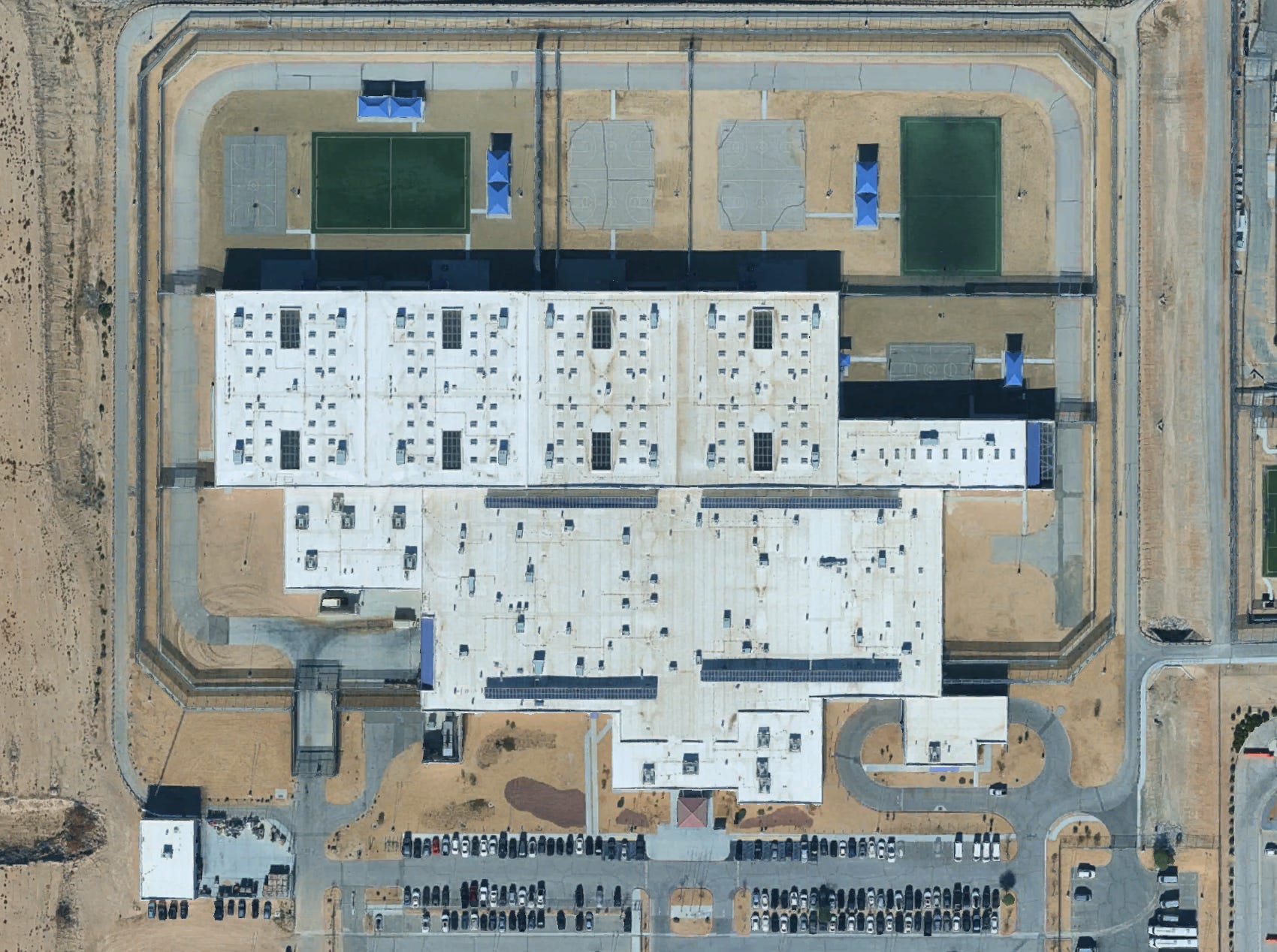
Worms in the water, freezing temperatures, cockroaches crawling on the walls, medical neglect, solitary confinement, these are just a few of the many reported nightmares coming from Immigration and Customs Enforcement detention centers across the US.
One man facing such horrors is Carlitos Ricardo Parias, a Los Angeles-based journalist who was shot and detained by ICE officers last October and taken to the Adelanto ICE Processing Center in the desert North of the city. According to reporting in The Intercept, today marks day 300 of his detention, in which he says he’s never received adequate medical attention for the gunshot wound, which has now turned his arm purple.
Adelanto is owned and operated by the GEO Group, one of the nation’s largest private prison companies. Because the facility is privately-run, it would have fallen under the jurisdiction of SB 995, also known as the Masuma Khan Justice Act, allowing the California State Department of Public Health to inspect the facility to ensure it meets sanitary, hygienic, and safe conditions for detainees.
After a hearing in the State Assembly Appropriations Committee last Thursday, the Masuma Khan Justice Act is now dead in the water. A rapid campaign of pushback from the community may be the only way to save it.
“I’m deeply disappointed by the Assembly’s action to kill SB 995, The Masuma Khan Justice Act, in committee today,” California Senator Sasha Renée Pérez—the author of SB 995—wrote in a press release on August 13. “Considering reports from across the country about inadequate standards of care at these facilities, including conditions that have resulted in deaths, as well as reports from our Attorney General highlighting numerous shortcomings, this bill would have provided life-saving health and safety oversight of privately-operated immigration detention facilities.”
SB 995 was placed on a suspense file by the Senate Appropriations Committee in May—legislation with budgetary requests greater than either $50,000 from the general fund or $150,000 from a special fund are placed on a suspense file. When SB 995 made its way to the biannual hearing in the Assembly Appropriations Committee where suspense files are considered, legislators opted to hold it back rather than moving it to the Assembly floor.
Pérez’s office is not sure why the bill was held.
“California has seen a record six deaths across privately-operated detention facilities since last year,” Pérez wrote in the press release. “If cost was the reason this legislation was killed, then I would ask: What is the dollar figure at which protecting human life becomes too expensive?”
The Assembly’s failure to advance SB 995 has faced sharp criticism from activists, including Riya Khan, the daughter of Masuma Khan. Masuma was detained for a month in the California City Detention Center where she was reportedly denied medical care, faced with repeated coercive demands to self-deport, and even had to wear socks on her arms to fend off the cold because prison operators would not provide sweaters.
“Everyone knows how personal and meaningful it was to my mom and to so many others in her shoes,” Riya told Last Week in Hell. “There is more than enough evidence of human rights abuses, a record number of deaths, and nationwide public outcry to protect the human beings that are imprisoned at California’s concentration camps.”
Riya now says community pushback is the only way for the bill to clear the Assembly floor by the deadline at the end of August. She and other community members are calling on California voters to call the offices of Assembly Speaker Robert Rivas, Appropriations Chair Buffy Wicks, and Governor Gavin Newsom to demand they pass SB 995.
“By deciding to kill this bill, California’s elected officials have failed us in a very big way,” Riya said. “This kind of decision protects the corporations that engage in abuse and torture, furthers human suffering, and will no doubt cause more deaths in the near future.”
As for Parias, reporting from LA Taco indicates that the Department of Homeland Security wants to move him to the Otay Mesa Detention Center near San Diego with the pretense that they’ll give him better medical care there.
Otay Mesa has its own reports of human rights abuses and it was recently purchased by DHS from CoreCivic, the nation’s other top private prison company, in what may be an attempt to shield the facility from state oversight.
A federal judge recently ordered immigrants be given clean water and adequate medical care at Adelanto. In moving Parias from Adelanto, DHS would push him further from his family and legal representation, which some have speculated is an attempt to violate his due process rights.
While the future of SB 995 remains unknown, many continue to suffer under inhumane conditions in ICE detention.
“We will not forget the human beings whose lives were cut short by corporations like CoreCivic and GEO Group that are operating the private concentration camps,” Riya said. “And we will keep fighting for those who are still suffering at those private concentration camps. They deserve dignity, not erasure.”